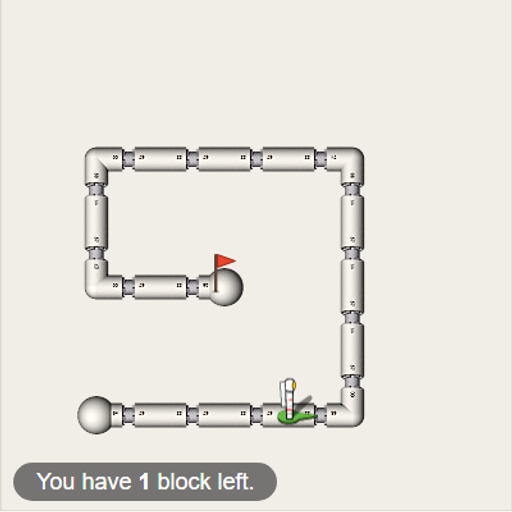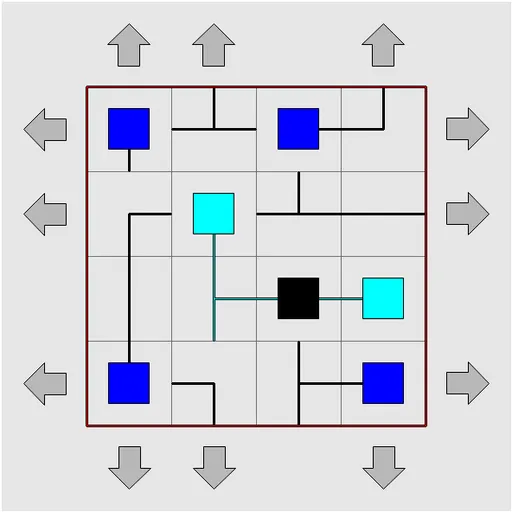
Netslide Pipe Puzzle combines a pipe network with a sliding tile puzzle. Every piece already points the right way, but the pieces sit on the wrong squares, and your only move is to push an entire row or column one step. The tile pushed off one end reappears at the other. Netslide Pipe Puzzle was written by Richard Boulton for Simon Tatham’s Portable Puzzle Collection, and it feels very different from its rotating cousin.
How to slide
Gray arrows surround the grid, one at each end of every row and column. Click an arrow to shift that line one square in the arrow’s direction. The black tile is the source, and tiles connected to it show in cyan or with a teal pipe.
Your goal is to rebuild the hidden network so every tile connects to the source with no closed loops. The status bar tracks moves and active tiles, for example Active: 4/16. When every tile is active, the board flashes.
Board sizes are 3x3, 4x4 and 5x5. Easy boards show red barrier lines, medium boards drop them, and hard boards also wrap around the edges.
Netslide Pipe Puzzle Controls
| Action | Keyboard | Mouse | Touch |
|---|---|---|---|
| Slide a row or column in the arrow's direction | Arrow keys to move the marker around the edge, then Enter | Left-click an arrow | Tap an arrow |
| Slide a row or column the opposite way | — | Right-click an arrow | Press and hold an arrow |
| New game, undo, redo | N, U, R | Menu buttons above the grid | Menu buttons above the grid |
What it asks of your brain
Sliding a full line means you can never move just one tile. To place a piece, you often have to disturb others and then put them back. That is the core idea behind permutation puzzles: a sequence of moves, done and then undone in a careful order, can swap a few pieces while leaving the rest alone.
You also need to read pipe shapes and picture where each must sit for its connections to line up. It is spatial planning with a memory load.
A method that works
- Learn on 3x3 easy. The barriers make most positions obvious.
- Build one row at a time. Finish the top row, then work downward so done rows stay put.
- Use the out-and-back trick. Shift a column, adjust a row, then shift the column back.
- Reverse with right-click. It turns three long pushes into one short one.
- Follow the dead ends. Each end tile must face a pipe that leads home to the source.
- Undo without fear. Undo is unlimited, so test a sequence and step back if it scrambles too much.
Handy Details
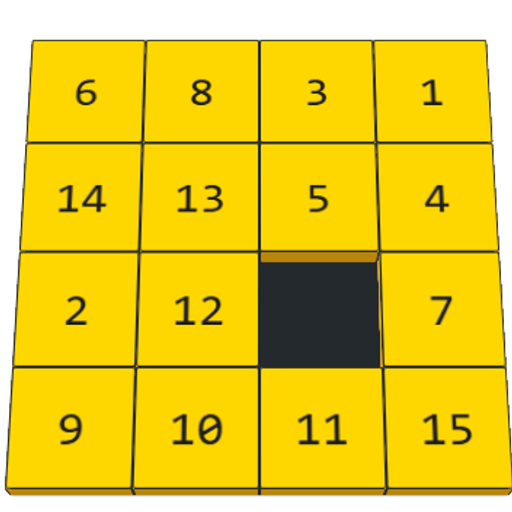
Custom lets you set size, wrapping and barriers. Small boards take a few minutes, and a low move count is a nice personal target. If you prefer turning tiles, play Net Pipe Puzzle. For another classic sliding challenge, try Fifteen Slide.
Tested and updated: