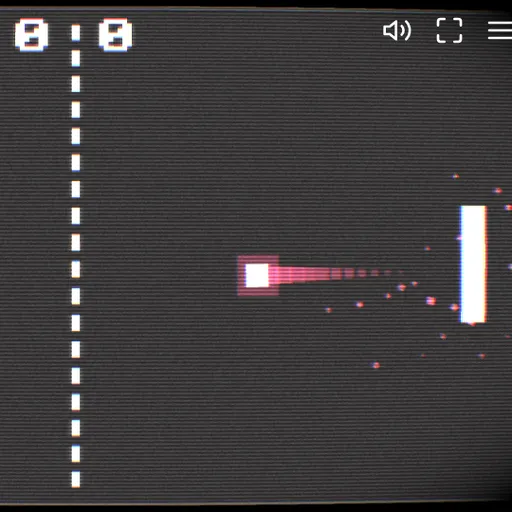
Paddle Duel is a modern take on the old Pong idea: two paddles, one ball and a race to 10 points against the computer. What lifts it above a basic copy is control. Where the ball meets your paddle decides its angle, and moving as you hit adds a curve, so every rally is a small geometry problem solved at speed.
Rules of a match
You control the left paddle. Serve with Space, a click or a tap and the ball heads across the court, bouncing off the top and bottom walls. If it gets past a paddle, the opposite player scores. The following serve travels toward the side that lost the point, and it waits in the center until you launch it.
Every return makes the ball a bit faster, up to a cap. The first side to 10 wins, and one more press starts a fresh match. The title screen even plays a demo match between two computer paddles.
Paddle Duel Controls
| Action | Keyboard | Mouse | Touch |
|---|---|---|---|
| Move your paddle (left side) | Up and down arrows, or W and S | Move the pointer up or down | Drag a finger up or down |
| Serve the ball | Space | Click | Tap the screen |
| Reset the score to 0-0 | R | — | — |
| Pause, restart or quit | Escape | Click the menu icon in the top corner | Tap the menu icon in the top corner |
Angles, spin and reading the bounce
A center hit sends the ball back almost straight. A hit near the tip sends it out at a sharp angle, and a sharp shot will strike a wall and reflect. The rule of reflection says the angle going in equals the angle coming out, so with practice you can predict where a bank shot will land on the far side.
Spin adds a second layer. If your paddle is traveling when it connects, the ball curves the way you were moving, and the curve fades over about a second. You are now judging two effects at once, which is great practice for tracking moving objects.
Rally tactics
- Use your paddle ends on purpose. Wall bounces are harder for the computer to follow.
- Swing through the ball to add curve, especially on balls that are already fast.
- Hit to the far corner. Your paddle outruns the computer’s, so make it travel.
- Recenter after each return so both walls stay in reach.
- At top speed, stop chasing and make small moves.
Quick facts
A match takes about three to five minutes. Phones must be held sideways, where you drag to move and tap to serve. For more bounce angles, try Pinball, or switch to pure reaction with Mole Bonk.
Tested and updated: