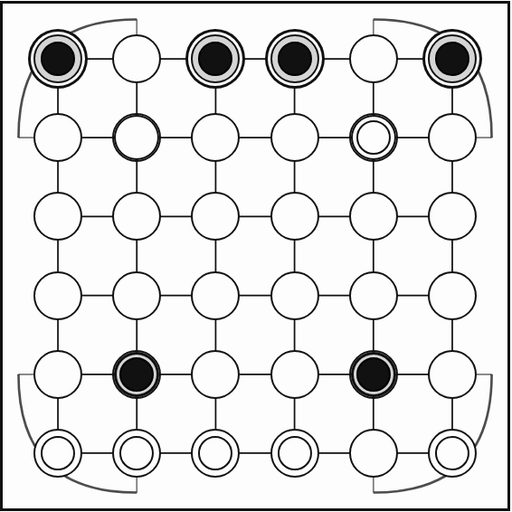
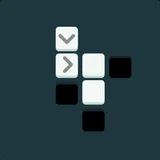
Black Hole Square is a minimalist puzzle game built for the js13k 2021 contest, where each entry had to fit in 13 kilobytes. Every level is a 6x6 board with a few white tiles and some black holes, and you must sweep the tiles away with a strict number of taps. There are almost no instructions, so part of the charm of Black Hole Square is figuring out each tile type on your own.
What the tiles do
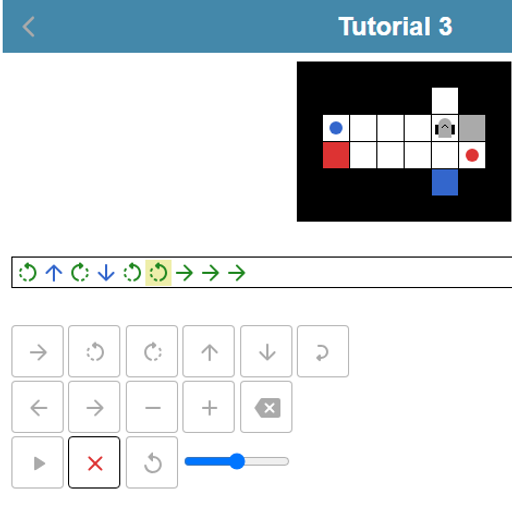
Swipe past the opening screens to reach the first board. The puzzle’s name is in the top left and your remaining moves are in the top right.
- Arrow tiles are the only real movers. Tapping one pushes it, plus every tile lined up in front of it, one square in the arrow’s direction.
- If that line reaches an empty square, everything shifts. If it reaches a black hole, the front tile drops in and vanishes. If it hits the edge, nothing happens.
- Plain white tiles cannot be tapped. They only move when something pushes them.
- X tiles disappear when you tap them.
- Neutron stars, tiles with a gray center, turn into new black holes when tapped.
A board is clean when only black holes are left. Running out of moves, getting stuck, or leaving stray plain tiles sends you back to the start of that puzzle.
Black Hole Square Controls
| Action | Mouse | Touch |
|---|---|---|
| Tap a tile (push a row, pop an X, or collapse a star) | Click the tile | Tap the tile |
| Skip to the next screen | Drag left across the board, or scroll sideways on a trackpad | Swipe left |
| Reset the puzzle (or go back if no moves were made) | Drag right across the board, or scroll sideways on a trackpad | Swipe right |
| Jump to any puzzle | Click a square in the progress row under the board | Tap a square in the progress row under the board |
Why it works your planning muscles
The move limit is the whole puzzle. Most boards give you exactly the number of taps the best solution needs, so you cannot fix mistakes as you go. You have to picture several pushes ahead, which is the same forward planning used in chess problems and in writing step-by-step proofs.
It also teaches ordering. Two taps done in one order can clear a board, while the same two taps reversed can trap a tile forever.
Planning tips
- Count your budget before the first tap. If a board allows four moves, each tap must remove a tile or set up a removal.
- Line tiles up, then push once. An arrow moves the whole row in front of it, so one push can drop several tiles into a hole.
- Never leave a plain tile off every arrow’s path. It has no other way to leave the board.
- Create holes where traffic is heading. A neutron star collapsed in the right spot becomes a target for a later push.
- Push X tiles when a row is already moving. Shoving one into a hole can be cheaper than tapping it.
Handy Details
Progress saves in your browser, and the game is built for one-handed play on a tall phone screen. A full run of 18 boards can take under an hour if you are sharp. For more move-efficient thinking, try Inertia Gem Slide or Peg Solitaire.
Tested and updated: